stress

Aligning With Lunar Energy Can Transform Your Life
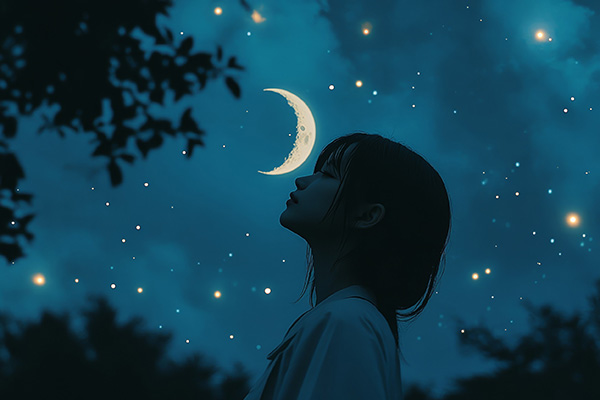 The Moon may appear subtle and serene in the night sky, but don’t be fooled. Her influence on our lives runs deep.
Many of us feel her pull, experiencing everything from restless sleep to emotional surges, even if we don’t quite understand why. Her cycles are ancient, her rhythm is eternal, and her whispers can guide us toward profound inner harmony if we choose to listen.
The Moon has been a source of mystery, reverence, and deep spiritual connection for humanity since the dawn of civilization. Across cultures and generations, she has been worshiped as a deity, tracked as a celestial guide, and honored through rituals that align with her phases.
Ancient civilizations such as the Babylonians, Egyptians, and Greeks meticulously studied her movements, associating them with tides, fertility, and even the passage of time.
The lunar calendar, still used in various traditions today, reflects the importance of her cycle, shaping religious observances like Ramadan and the Chinese New Year.
Her phases—waxing, full, waning, and new—have inspired countless traditions rooted in transformation and renewal. The Full Moon, in particular, has been regarded as a time of heightened energy, illumination, and manifestation.
In the realm of personal and spiritual health and well-being, the Moon is also much more than a celestial body. She is a divine force and a sacred mirror to our innermost energetic tides. By syncing with her cycles, we can unlock a deeper connection to ourselves, the Earth, and the Universe.
The Bliss Of Being In Your Element
 A former co-worker I hadn’t heard from in years recently contacted me. She asked me how I was doing.
“I’m in my element!” I said. “Working from home, doing what I love, and surrounded by my menagerie of many.”
After our chat, I began to think about what I had just said. The phrase “being in my element” isn’t something I use regularly, so it made me pause and consider its true meaning. What does it mean to be in one’s element?
The saying “being in your element” has its ancient mystical roots. Historically, the concept of “elements” referred to the four classical elements — earth, water, air, and fire — that were believed to make up the world. Each element was thought to have its own characteristics, and people were metaphorically associated with an element that suited their personality or environment.
For example, to say that someone is “in their element” was to compare them to a fish in water — perfectly suited to their surroundings. Over time, this literal meaning evolved into the figurative meaning we use today: feeling comfortable, confident, and successful in a situation that matches one’s abilities or preferences.
As I examined my current life circumstances, I realized that I had intentionally set my vision and manifested exactly the work environment I wanted. This wasn’t an accident — it was the power of focused intention and alignment with my true calling. Continue reading
The Healing Power Of The Ocean
 Just as we clean material objects to maintain their quality and longevity, our mind, body, and spirit also require regular cleansing to ensure optimal functioning. Environmental stressors, emotional upheaval, and the demands of daily life can accumulate as energetic debris that weighs us down physically, mentally, and spiritually.
Our energetic field absorbs influences from people, places, and experiences. Over time, unresolved emotions, stress, and negativity can cloud our vitality, leading to fatigue, irritability, and disconnection from our inner selves.
Just as we clean our homes or our physical bodies, it’s important to clean our energy field. Neglecting to do so can affect our long-term well-being, leaving us feeling drained and spiritually stagnant.
One of the most profound ways to restore balance and revitalize our energy is through ocean healing – a timeless practice known to humankind since ancient times.
The ocean has long been revered as a sacred space for cleansing and rejuvenation. Its rhythmic waves, expansive horizon, and vast depths symbolize release, renewal, and infinite possibilities.
Simply spending time by the ocean can have a profound effect on our nervous system, calming the mind and grounding the emotions. The soothing sounds of the waves, the cool breeze, and the connection to the Earth’s vast waters stimulate relaxation and promote a meditative state, making it easier to release tension and embrace inner peace.
Unlock The Door To Mental Freedom
 We’ve all been there — lost in thought, replaying a conversation from years ago, wishing we’d said something different, or fixating on something that hasn’t happened yet and probably never will.
Our minds have a clever way of trapping us in the past, or pulling us too far into the future. In the process, we miss the beauty and joy of the present moment.
Being fully present is the key to happiness — the hidden treasure of everyday joy and fulfillment.
When we embrace the here and now, we experience true mental freedom. Instead of being burdened by past regrets or future fears, we begin to see life as it is — vibrant, alive, sometimes challenging, but always full of infinite possibilities and countless blessings waiting to be appreciated!
Think about the last time you were fully immersed in any experience. Maybe it was watching a sunset where the sky lit up with color, listening to music that made your soul soar, or laughing with a friend until your stomach hurt. In those moments, you weren’t dwelling on past mistakes or worrying about tomorrow’s to-do list — you were just there, experiencing life in real time.
Now, think about how often you are distracted by the constant pull of digital technology that keeps you from being fully present. Your phone pinging with notifications, drawing your attention away from the people and experiences around you.
Protect Yourself From Toxic Emotional Influences
 A client I read for once told me that he chose to be a loner because people always wanted something from him. “People either want money from me or they want to bend my ear with their problems,” he said. This statement struck a deep chord with me.
Over the years, I have noticed a significant increase in clients asking how to protect their energy. I find more people are becoming aware of how they are spiritually affected by others, especially those who bring negativity into their home or work environment.
I have had callers tell me how they come home from work exhausted – not from work, but from a toxic work environment. Even a simple telephone conversation can be draining if the person on the other end is met with an outpouring of worry, complaint, or anger. I dare not even mention the many toxic energy pitfalls of today’s dating scene!
I firmly believe that the influence of toxic energy on our systems is vastly underestimated in our daily lives. Our endocrine and nervous systems are particularly affected by our thoughts, actions, and interactions with others. A lack of emotional balance and a concern to avoid unnecessary toxic energy has undoubtedly become a priority.
Years ago in South Africa, I consulted a brilliant homeopath for what turned out to be an overactive thyroid. He diagnosed my condition using reflexology and his medical intuition. After the diagnosis, he said to me: “I’m going to give you some muti (a Zulu word for traditional medicine used in southern Africa). But until you sort out your emotional situation, it’s probably not going to make much difference.”
The Mystical Purpose Of Daydreaming
 In school, I was often reprimanded for daydreaming. My eyes would glaze over as I gazed into the distance, lost in a magical world of my own.
It amused the other children in the class and clearly frustrated my teachers, who mistook it for inattention or laziness, but even then I intuitively knew there was something valuable in my moments of mental wandering.
Little did I know that my frequent daydreaming opened doors not only to creativity and problem-solving, but also to spiritual connection, higher consciousness, and most importantly, manifestation.
Research has shown that daydreamers actually experience increased brain activity. Contrary to the common misconception that daydreaming equals a blank or stagnant mind, studies show that when we allow our minds to wander, we engage the problem-solving and creative areas of the brain.
Neurologically speaking, daydreaming activates the default mode network (DMN), a system in the brain that lights up when we are not focused on external tasks. The DMN connects us to deeper thoughts, memories, and emotions, often leading to sudden insights or realizations.
But what science describes as a purely neurological phenomenon is, in spirituality and metaphysics, a gateway to the higher self and beyond. When the mind wanders aimlessly, we enter an intermediate mental space — a threshold between the conscious and the subconscious. This is where creativity, intuition, psychic impressions, and spiritual connection are most accessible while awake.