culture
Nourish Your Mind, Body & Soul With Real Food
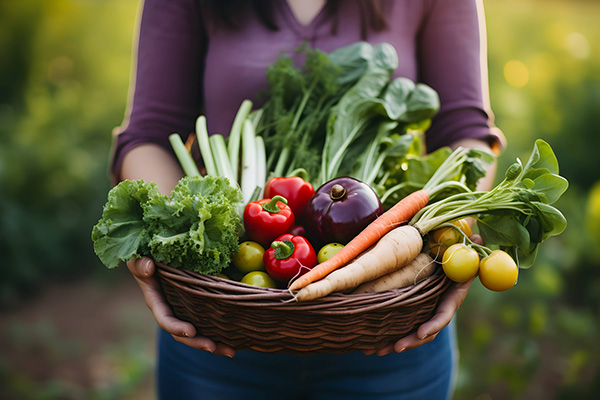 My relationship with food evolved the day I decided to start my own garden. I didn’t have much space where I lived, so I rented a plot in a community garden nearby, for a very small fee.
Although it soon became a part-time job, it also turned into my sanctuary. Any stress from the day cleared when I went there.
I was always eager to go there and visit my growing family of fruits, herbs, flowers and vegetables. It made me feel like a child again!
Connecting with the Earth on such a deep level also gave me a new perspective on my spiritual identity.
From being inspired by fellow gardeners to teaching my son important life skills, I was motivated to get serious about treating my body like a temple and also raising awareness in others.
Something I once took for granted and paid little attention to, became a great passion and concern for me.
I saw our society falling into a downward spiral health wise and knew it started with the quality of our food and water.
I began to educate myself more on how everything we consume was being processed and came to the conclusion how vital it is for us to re-adopt some of the old traditions of our grandparents and ancestors. By taking their wisdom and applying it to our current food crisis, we can raise the consciousness of our world, feed the poor, and heal ourselves in mind, body and spirit.
Context, Context, Context
 In the sales and marketing field they often talk of ‘location, location, location’ (no matter how good your product or service is, how successful you are often comes down to location). Perhaps in our communication with others we should think of context, context, and context?
We have entered a period of time in the world that communication is misconstrued, even fake and has more opportunities to be interpreted as confrontational, biased, and not politically correct.
On top of that put an individual’s personal style of communication – introvert, extrovert, analytical, emotional subjective and all the other styles, and the matter becomes more thorny.
Then, add even another layer, such as email and social media, which does not involve the other person being face-to-face.
Now communication becomes even more complex, because body language and the human expression energetically is not a resource available to us to can pick up on the subtle options for interpretation. We will initially respond to the email from our frame of reference, and our reference alone, which is biased by our experiences.
So what do we do? Well, we recognize the importance of ourselves being energy vibration, through which our body communicates consciously and subconsciously with everything in our environment. We acknowledge that our emotions, beliefs and thoughts are complex, inter-connected and influence each situational response in our communication.
The Real Secret To Smudging Is Your Intention
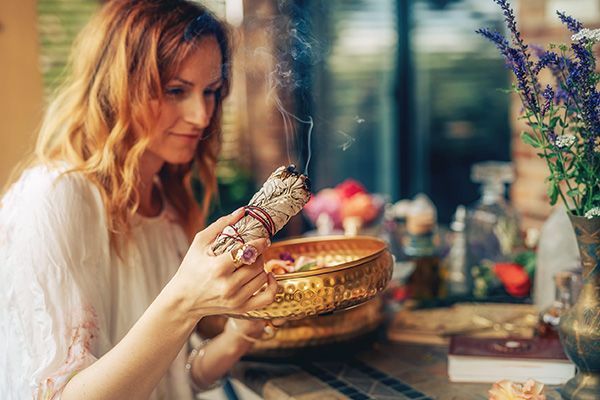 The secret to smudging isn’t just in the smoke alone. It is powered by your intention. The herbs may help to cleanse the air, but it is your focused energy and mindful purpose that makes the real difference.
This is what I learned from my mentor when I undertook my Ukuthwasa as a shaman initiate many years ago in Southern Africa. An initial part of my rigorous training as a Sangoma, or traditional healer, was a self-cleansing ritual using Mphepo, made up of herbs indigenous to Southern Africa.
“Smudging,” simply put, is the burning of certain herbs to create a cleansing smoke bath. The smoke is used to cleanse areas used for rituals and ceremonies, as well as any tools or objects used for such cleansing, as well as to cleanse people.
The practice of burning incense or herbs is held sacred by many indigenous cultures. It is aimed at protecting, cleansing and purifying the spiritual and physical bodies, with the smoke being the key to rid one of negative energy.
The intention behind any smudging ceremony is a very significant part of its success. With the focus and intent of the “smudger” fully aligned, spiritual, emotional, physical and mental balance can be achieved.
It may be a good time to smudge yourself, or your environment, when you feel depressed or angry, or feel that any exterior negative energy is affecting you, your surroundings or your possessions. Or you may just wish to ensure or enhance positive energy in spaces used for meditation or healing. Continue reading
Small Gestures Of Kindness In A Time Of Cruelty
 Many people are feeling anxious or uncertain in recent years with everything that has been happening in the world.
Some are fearful and others stressed or unsure how to act appropriately in these restless times. Some even act out in destructive or dramatic ways, taking their frustration out on others.
It is common knowledge that the digital age and social media has spawned a generation of computer warriors and online bullies who express their insecurities and fears, in often extremely mean and cruel ways, from the comfort of their living rooms and basements.
This savage lack of empathy and decorum has seemingly now spilt over into our streets and neighborhoods too.
It is easier for many to be critical and judgmental, to complain and argue, instead of facing facts, dealing with the truth and seeking lasting solutions.
Often not knowing the entire story, many people choose to see only see one side of things, while telling others off for disagreeing with their limited point of view. The computer has unfortunately given some people a platform to spread strife and hatred, instead of love, hope and kindness.
I pray that more people will strive to seek the truth and learn to look for the good and kind in others. Showing tolerance, patience and kindness is always the better, more open approach. And always remember that if someone attacks you directly, then it often means they are somehow struggling or hurting. It usually serves no real purpose to attack them back. Continue reading
The Difference Between Soul Rescue And Soul Retrieval
 In shamanic and spiritual traditions, soul recovery practices are based on the understanding that a person’s soul essence or ‘life force’ can become fragmented or lost due to trauma.
While these two shamanic arts are closely related and often assumed to be the same practcie, they refer to different contexts of healing. There is a subtle, but key difference.
Soul retrieval is the most common term used in modern shamanism and it is based on the idea of soul loss.
When a person experiences a severe physical or emotional trauma, such as an accident, abuse, grief, or a difficult breakup, a part of their vital essence may abandon the body to survive the experience. This is essentially a spiritual survival mechanism, similar to dissociation in psychology.
This disassociation might be related to the trauma of a car accident or extreme injury, or perhaps a memory of a time in someone’s life when an attribute of their soul felt threatened or fearful.
Other typical examples include physical, sexual or emotional abuse as a child; a feeling of abandonment after the death of a relative; financial ruin; nearly dying; or loss of a job.
Someone suffering from this kind of soul loss might feel “spaced out,” numb, incomplete, or like they are watching their life from the sidelines. Chronic depression or a sense that “I haven’t been the same” since the traumatic event are common indicators.