emotions
Choosing To Shift Your Vibrational Timeline
 There is a moment on our spiritual path when we begin to sense that reality is not as fixed as we were once taught.
I have spent decades walking between worlds, learning to listen then unseen and metaphysical. Through my training, I have come to understand that our lives unfold across energetic pathways I refer to as vibrational timelines.
These timelines are not abstract ideas. They are alternative states of consciousness that shape our everyday reality, our relationships, and our spiritual evolution.
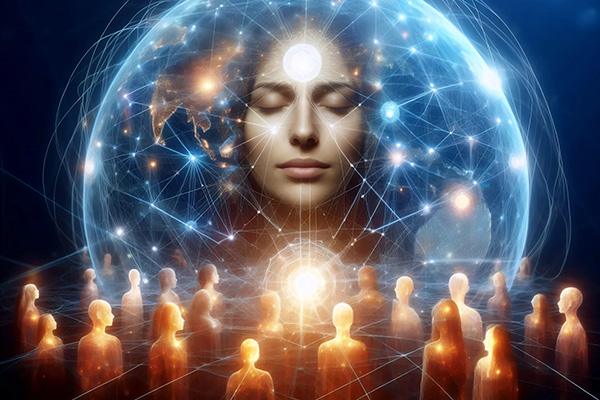
Our reality is not singular and fixed, but rather a vast spectrum of parallel timelines. Each timeline is a distinct version of “now” existing simultaneously at different frequencies of vibration.
Everything that exists, including our thoughts, emotions, beliefs, and physical matter, has a vibrational frequency. Your dominant frequency at any given moment acts like a tuning fork, aligning you with the timeline that resonates with you.
The timeline you experience is simply the one you’re tuned into and your consciousness is the selector. Your mindset, emotions, core beliefs, and level of spiritual awareness all determine which timeline you’re anchored to. Fear, doubt, and low-energy emotions align with lower-frequency timelines, while love, clarity, and expanded awareness with higher ones.
The Healing Power Of Movement
 In my earliest years of life, I was severely shy, fearful of anyone I didn’t know, and acutely anxious of being separated from my mother. Any time we were out, or in the presence of others, I clung to her tightly and hid in silence behind her.
My mom soon received many recommendations to enroll me in dance lessons, to help me come out of my shell. She did, and I emerged. That was my first experience of the healing power of movement.
It continued into my ‘terribly turbulent’ teens, during which ballet became my only safe haven and sanctuary.
In the ballet studio I could pour out every feeling. From the barre to the stage, every move was an opportunity to express what I needed to release, and to find the solace I needed.
A decade later, I found myself bedridden with chronic fatigue. Yet, visions of ballet spontaneously continued to dance across the screen of my mind’s eye – almost every moment of every day. I could feel the movement in my body, even though my body was unable to move.
I know now it was a premonition of a life-changing return to dance, that ultimately remedied my illness and opened the way to reveal my gift of intuitive healing dance.
The power of movement is a beautiful thing. It can literally shift, shape, and reform energy. Energy itself comes in many forms and functions. Emotion, if you think about it, is energy in motion: e-motion. Everything, including you and I, are an emanation of energy from the Absolute Truth and Personality of Godhead.
Give Yourself The Grace Of Forgiveness
 If you are an empath you may believe that forgiveness should be easy for you, or at least easier than it is for others. But I’ve spoken to many empaths and highly sensitive people over the years who all struggle with forgiveness.
One of the main issues with forgiveness for the empath is that we feel another’s emotions intensely, literally as our own. This muddies the waters considerably, because it tends to blur boundaries. Blurred boundaries can often lead to a closed mouth for an empath. Why? Because it is difficult for us, especially in childhood or in romantic relationships, to know where we end and another begins.
It is easy for others to manipulate appropriate boundaries with an empath, or to erase them altogether. All the empath knows is that there is pain, sadness, a sense of frustration, or anger. If you are an empath, then the question becomes are you angry with them, or yourself? Should you have been able to foresee the catastrophe happening, the relationship ending, job imploding, and so on. This leads to self-doubt and the rehashing of incidents that occurred years ago…with no resolution.
In the meantime, every time an empath thinks about the situation, past or present, we feel it…and the cycle continues.
Yes, you are empathic, intuitive, even psychic, but that does not make you immune to being human, neither does it make you all-knowing or all-seeing, especially when it comes to your own life, childhood or relationships.
The Return Of The Divine Feminine
 Sometimes when I do psychic readings, I sense a powerful female presence from Spirit, with wings spread wide, who appears to be lending strength and support to my clients.
I recognize her as the Egyptian Goddess Isis, or by her Greek name, Auset.
When Goddess Isis comes into a reading, I know that serious business is at hand and that my client needs to be brave, strong, and to believe in themselves. This brings in the grander subject of the Divine Feminine and how that is showing up during my client’s reading.
The awakening of the feminine is alive and happening all around us, and more widely recognized now than ever before.
The rise of the Divine Feminine is showing up in all sorts of arenas, including the corporate workplace. Women, as a whole, are speaking up and no longer have much tolerance for sexual discrimination, lower pay rates, or other outmoded ways of female disempowerment.
However, the interesting thing about the Divine Feminine is that it has a quality of power that is not based on forcefulness. It works more in alignment with the psychic realm and intuition. The Divine Feminine works in harmony with what is, and ways to empower everyone.
Men are very much a part of, and inclusive in the reawakening of the Divine Feminine, because this is not about gender, but more about a more balanced, harmonious way of living life. The Sacred Masculine and the Divine Feminine go together perfectly, like peanut butter and jelly! We need both sides present and active for complete wholeness.
Spirit Is Always With You
 How do you connect with your inner guidance? You soul essence? Ponder this question for a moment. Then shut your eyes, breathe deeply three times… and ponder this question again.
Spirit is always present within you. It does not take a time out to go get a coffee, or have a nap. Spirit simply is a part of you that never dies.
When you close your eyes and simply breathe, you will feel lighter. That is spirit trying to be more prominent than the ego.
Spirit never causes stress, discomfort, unease or negativity. Spirit is pure 100% unconditional love, and every person has this inside of them.
However, as you move forward in life, ego will always try to override spirit, whether in decision-making or choices that are important (or simple).
Ego can create discomfort, doubt, fear and the wrong type of attitude to live a spirit-filled, love-filled life.
How do you change these patterns? At least once a day, simply sit, breathe slowly, eyes closed, hands on lap. No parts of your body should be crossed, i.e. legs, arms or hands.
Now feel the essence of your true spirit flowing in your body and around your soul. Feel the essence of goodness that comes to you from this energy. Spirit will never make you feel down or negative. It will always be uplifting or at least instill a sense of calm or peace inside of you…even if only for the moment.
The Empowered Empath’s Guide To Spiritual Self-Care
 Empaths, sensitives and intuitives tend to be givers. Loyal, sometimes to a fault, and fiercely protective of those they care about… moving at lightning speed whenever called upon.
So, when I say to an empath that it may be time to put themselves first, the response is often mixed.
But, if putting yourself first seems too selfish or too difficult, try something simpler: at least put yourself on an equal footing with those you love and care for.
For many sensitive and highly intuitive people, self-care must be an acquired behavior… and it’s a big one. Empaths intend to be selfless, to help, heal and facilitate those they care about. Wonderful!
But remember, if this is your goal, then begin with yourself. The stronger, healthier and happier you are then the more effective, nurturing and supportive you can be to those around you.
Putting yourself first doesn’t mean that you are doing only what you want to do all the time, and it doesn’t mean that you are suddenly going to ignore those you care about.
What it does mean is making it a priority to take care of your own physical, mental, emotional and spiritual needs. This can be a tall order and quite the task for some empaths. Don’t wait until you are in a meltdown… frustrated and snapping at everything and everyone around you, with little or no provocation.