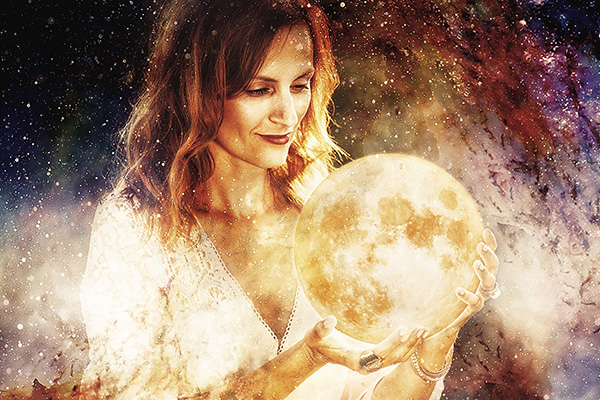
the mother
My Mother’s Prayers Still Carry Me
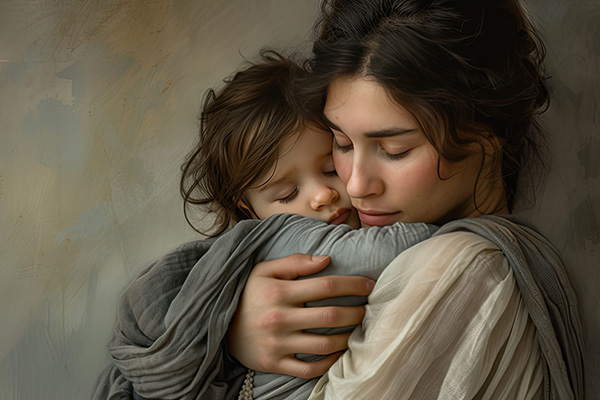 I still cry when I hear that beautiful song Mamma by Claudio Villa.
Growing up on a small island in Central Italy, I remember my mother’s daily prayers and all her sacrifices. Those examples have always followed me. They are still my daily support and strength.
I cried today in church as well, while singing the Ave Maria. My lovely mother Margherita passed in the early 90s and although she is not with me physically, she is here in my heart, supporting and guiding me from above. She has been my spiritual guide since my first girl was born and I named her Margherita too.
I always loved my mother’s name, which in Italian is the name of a flower known as “Daisy” in English.
It was during that very difficult pregnancy that my mom came to me for the first time. She spoke to me and I knew her when she walked into my room. I smelled her perfume. She loved the Vele Al Vento fragrance and I that way I knew she was there for me.
Being almost 40 years of age, going into a first pregnancy was scary. I had many medical problems. It was a difficult time and I needed her so much, and she was there for me and always reassured me I was having a beautiful baby girl.
Yes, I did not need the ultrasound to confirm this, she had already told me! When I held my bundle of joy, my first words were: “Grazie Mamma per la mia piccola Margherita,” meaning “Thank you Mom for this lovely flower.”

Connecting With Gaia Through The Art Of Dowsing
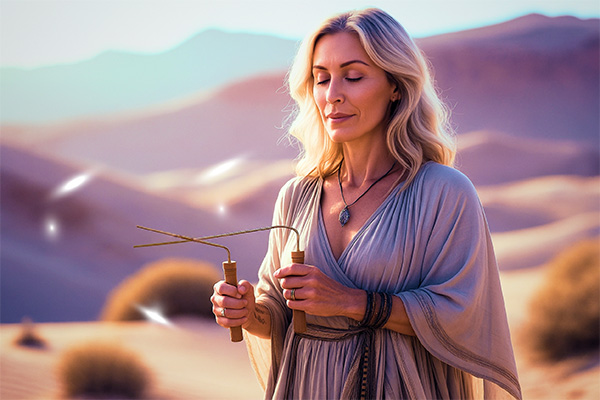 I’ve always loved working with dowsing rods. Over the years, I’ve used them in many different ways, such as tracking down lost car keys, finding jewelry, and locating missing household items in the most unlikely places.
Dowsing is a wonderful intuitive practice. I’ve dowsed for many things over the years, but water dowsing has always fascinated me, because it connects nature and the physical world with the spiritual and mystical.
While digital technology and scientific methods have become the preferred tools used by engineers and geologists to accurately locate groundwater, pipes, and leaks, the ancient art of water dowsing is still practiced today. This practice is often called “water witching” in some parts of the United States.
Many farmers and homeowners still hire dowsers to find well locations, especially in rural areas. In fact, some professional water companies and utility providers have been known to also use dowsing rods to help locate pipes and leaks, alongside modern technology.
For me, this way of tuning into the earth’s natural flow and sensing what lies beneath the soil is deeply grounding and primal. It feels like aligning with the consciousness of the Earth herself, to Gaia, or Mother Nature. Gaia is more than a poetic metaphor; she is a living, breathing entity whose subtle energies speak to us if we know how to listen.
When I dowse for water, I feel as though I’m entering into quiet communion with her. I am attuning to her rhythms, her hidden pathways, and her silent wisdom. It’s a sacred act of reconnection, a reminder that we are not separate from nature, but part of her great, mysterious web of existence.
What I Learned From Egyptian Goddess Hathor
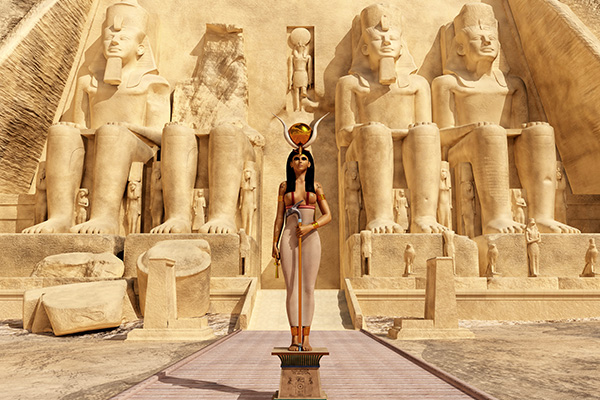 From the moment I first encountered her, Hathor, the ancient Egyptian goddess, she felt like a luminous companion on my spiritual path.
To me she isn’t just a myth or a symbol. She’s a living presence and a spiritual guide. She’s also a gentle yet powerful presence in my psychic and healing work. Her energy speaks to me on a deeply intuitive level.
My connection with Hathor began unexpectedly while reading a book on ancient Egypt. Suddenly, I felt a comforting warmth surround me. It was as if a long-lost friend had returned.
Then, I was guided to raise my hands, palms facing outward and I sensed her hands and palms facing mine. A glow of golden light flashed before me and I felt a warm sensation entering my palms and almost as though my hands were being supported and held, and all time was suspended.
In that timeless and powerful moment, Hathor’s nurturing love enveloped me, and her ancient wisdom whispered that time is merely a construct.
In the Infinite Light, there is no past or future, only this sacred now. In is in the present moment that healing and miracles unfold.
As a psychic, I find that Hathor naturally aligns with my practice. She is not just the goddess of love and beauty, though she radiates both. She embodies a vibrant, nurturing energy that opens emotional and spiritual channels.
Embrace The Wisdom Of Your Inner Crone
 The archetypes of the Maiden, the Mother, and the Crone are central figures in various spiritual and mythological traditions, especially in Paganism and Wicca, where they represent the Triple Goddess. They symbolize the three primary phases of a woman’s life and the cycles of nature, and are associated with the phases of the moon — waxing, full, and waning.
The Maiden is associated with the waxing moon, representing youth, new beginnings, potential, and innocence; the Mother aligns with the full moon, embodying creation, fertility, abundance, and maturity; and the Crone is associated with the waning moon, symbolizing wisdom, life experience, reflection, and endings that lead to new beginnings.
In Greek mythology, these archetypes are seen in the Moirai or Fates: Clotho (the spinner of the thread of life), Lachesis (the measurer), and Atropos (the cutter). Similarly, in Hinduism, the goddess Kali represents the transformative power of the Crone, who presides over destruction and rebirth. They remind us of the cyclical nature of existence and the interconnectedness of the stages of life.
Mary, the mother of Jesus, embodies the essence of the Crone within the Christian tradition. As Mater Dolorosa (Sorrowful Mother), she is revered as a figure of profound strength and resilience, having witnessed the suffering and death of her Son. Her wisdom, born of enduring immense grief and unwavering faith, serves as a beacon of strength and compassion for the faithful. She is seen as a compassionate and empathetic figure who understands human suffering and intercedes for believers with her love and wisdom.
The Mystical Symbolism Of The Hamsa
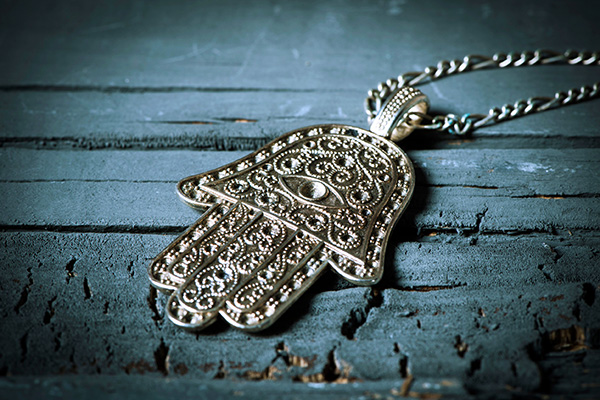 The well-known Hamsa symbol has a rich tapestry of esoteric meaning that spans several cultures and religious traditions, including Islam, Judaism, and Christianity. It is commonly used as a protective amulet, offering protection from the evil eye, as well as a talisman or good luck charm, bringing its wearer blessings in the form of happiness, health, and fortune.
The Hamsa is also known as the Khamsa, Hamesh, the Hand of Fatima, the Hand of Miriam, or the Hand of Mary. The names “Hamsa” and “Khamsa” both refer to the number five in Arabic while “Hamesh” means five in Hewbrew, all symbolizing the five fingers of the hand.
In Islamic tradition, this famous esoteric hand is named after Fatima al-Zahra, the youngest daughter of the Prophet Muhammad and his first wife Khadija. Fatima is known by many titles in Islamic tradition, of which al-Zahra (meaning “the Radiant One”) is one of the most prominent. Her life, devotion to family and faith, and moral integrity are admired and serve as an inspiration to Muslims around the world.
In Jewish culture, the hand symbol is named after Miriam, the sister of Moses and Aaron, who was a prophetess and is an important figure in Judaism. In some Christian contexts, it is also known as the Hand of Mary, although it is less commonly referred to by this name. In this instance it is associated with Mary, the mother of Jesus, who is revered for her purity, grace, and maternal protection.