afterlife

The Enigma Of Your Soul Contract
 Before we come into this lifetime, we design a soul contract. We choose a family that we want to be born to and we plan specific things that we want to accomplish, such as career, relationships, children, and so on. The contract is about our spiritual self and therefore also includes those things that we need to overcome and learn from.
Some of the more important things in your contract may come as a surprise, because often they are those things you do not want to do! This is usually a sure way of knowing that something is contractual. The things we prefer to do, or have done, we’ve already mastered, but the challenges and obstacles offer us opportunity to overcome our fears and anxieties, to step forward and learn more, to grow spiritually.
Some contracts are also much longer than others. Some of us remain here for a long time, while others do not. I doubt anyone knows for sure, but for the time that we are here, we must make every effort to learn and grow from every life experience.
This is also why some of us attract the wrong people, and constantly get into the wrong relationships? In these cases it is often your soul contract trying to teach you to speak up for yourself and claim your self-worth.
When old souls come in, usually nothing bothers them. They tend to take things with a grain of salt. However, when new souls come in, they are often very excited about so many things and can’t seem to get enough done.
There are also the creative souls, who are very talented, but also have a lot of emotional stress. Part of their contract is to learn to manage their stress better, so that they can be more open to their creative gifts. Continue reading
Do Our Loved Ones Become Our Spirit Guides?
 While doing mediumship readings, I often have people ask me if their loved ones who have crossed over are now their spirit guides. The answer is, no. While our loved ones, who have crossed over, do watch over us, and communicate with us through dreams and other means, they are not our spirit guides.
Becoming a spirit guide requires many life times of experience, schooling and training. Our loved ones can give us energy, love and light, but they are not allowed to interfere with our destiny in any way.
So, what is the difference between spirit guides and loved ones who have crossed over?
Spirit guides are with us before we choose our life. They help us decide what goals we have and what we want to emphasize and work on in the next life. They remind us of the lessons in life we struggle with every life.
Our guides also remind us of the lessons we have avoided signing up for in our past lives. Have you taken on disability? Poverty? Wealth? Abuse? Fame? What adversities have you overcome and which ones will you need to take on?
Often we feel we are being punished by these adversities when on earth, when in reality, we decide to take them on and gain the strength, compassion, empathy and wisdom they teach us.
Every soul will need to take on the mirror images of every human experience. Poverty and wealth. Sickness and health. Justice and injustice. Power and powerlessness. Freedom and restraint. These aren’t punishments.

The Time I Visited All My Pets In The Afterlife
 Life has become much clearer to me over the years. But not in the usual way you might expect.
Having a Near Death Experience (NDE) during surgery at the age of 34, plus practicing as a professional psychic reader fo over 46 years, changes your outlook on life and death in many ways.
One of the questions my clients sometimes ask is, “Do pets go to Heaven?” From my lived experience, the answer is a resounding, yes!
During my NDE, I remember quickly rising up through a tunnel toward a light so bright I had to squint my eyes. I then arrived in a space that felt like the outside of an elevator. It was some kind of ‘in-between area.’
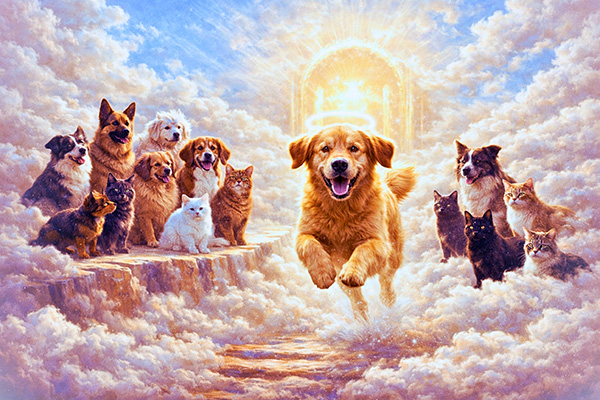
As I stepped inside, every pet I had ever loved in my life up to that moment was gathered around my feet, tails wagging, overjoyed to see me. Dogs and cats…they were all there!
So yes, in my experience, your pets will be there to greet you, just as mine were. On the other side, there are animals of all kinds, peacefully coexisting and filled with joy. I have no doubt our pets in Heaven know when we are coming home to join them. They wait for us with open hearts.
In Heaven, if you wish to have a home, you will. What you think becomes your reality there. So, of course, your beloved pets will once again live with you. They are already running, playing, and waiting for you and you will recognize each one of them.
The Difference Between Soul Rescue And Soul Retrieval
 In shamanic and spiritual traditions, soul recovery practices are based on the understanding that a person’s soul essence or ‘life force’ can become fragmented or lost due to trauma.
While these two shamanic arts are closely related and often assumed to be the same practcie, they refer to different contexts of healing. There is a subtle, but key difference.
Soul retrieval is the most common term used in modern shamanism and it is based on the idea of soul loss.
When a person experiences a severe physical or emotional trauma, such as an accident, abuse, grief, or a difficult breakup, a part of their vital essence may abandon the body to survive the experience. This is essentially a spiritual survival mechanism, similar to dissociation in psychology.
This disassociation might be related to the trauma of a car accident or extreme injury, or perhaps a memory of a time in someone’s life when an attribute of their soul felt threatened or fearful.
Other typical examples include physical, sexual or emotional abuse as a child; a feeling of abandonment after the death of a relative; financial ruin; nearly dying; or loss of a job.
Someone suffering from this kind of soul loss might feel “spaced out,” numb, incomplete, or like they are watching their life from the sidelines. Chronic depression or a sense that “I haven’t been the same” since the traumatic event are common indicators.