personality
The Psychic Insights Of Remote Viewing
 In my own journey of intuitive development, I have been exploring the possibilities of Remote Viewing. It is a psychic skill that is not often talked about.
Remote viewing is a clairvoyance technique that allows you to gather information about a distant or unseen target, such as a specific location, object, or event, using extrasensory perception (ESP) or “anomalous cognition.”
Remote viewers have minimal or no prior information about the target and rely solely on their capacity for “nonlocal awareness” (distant psychic sensing) to explore and describe it.
Remote Viewing gained popularity in the 1970s and 1980s, primarily through the efforts of the U.S. government-sponsored Stargate Project.
It is essentially the practice of clairvoyance using a formalized technique or protocol developed by the U.S. military during the Cold War as a tool for intelligence gathering. Over time, however, it has transcended its military origins and become a subject of interest to those seeking to tap into their latent psychic abilities.
Although a number of remote viewing studies have been conducted by individual researchers, most of the activity in this field to date has been conducted by three major laboratories: The Stanford Research Institute (SRI) in Palo Alto, California, the Princeton Engineering Anomalies Research Laboratory (PEAR) at Princeton University, and the Mobius Laboratory in Los Angeles, California.

The Misguided Fear Of ‘Missing Out’
 FOMO. The “fear of missing out.” The term is typically used when young people feel envious or sad because they haven’t been invited or can’t go to an event or outing that their friends are attending. For others it is a matter of feeling driven to attend absolutely everything, including the opening of an envelope.
This mindset is spiritually misguided. Firstly, if you think carefully about what you are worried about missing out on, you usually find that you are not missing out on that much after all.
Secondly, there are much more valuable things to invest your time and energy in, especially for a young person. For example, if we don’t invest in improving our well-being in body, mind and spirit early in life, we will miss out on many blessings of joy, fulfilment and abundance later in life.
Instead of trying to attend every event or doing everything and the kitchen sink to keep up with the Joneses, it makes much more sense to create a foundation of joy, inner peace and abundance for ourselves. It is a wellspring that will never run dry. This is what one should really be ‘afraid’ of missing out on.
The People In Your Tarot Court Cards
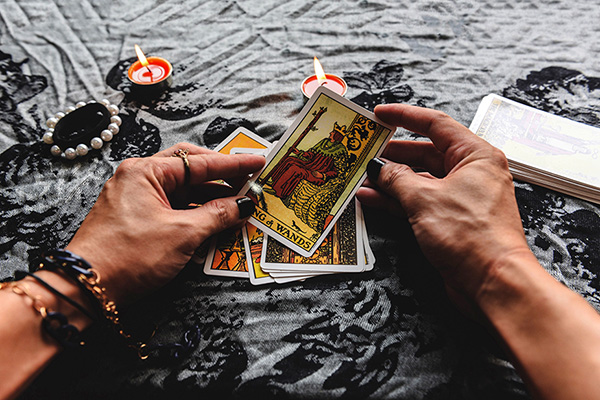 In a psychic tarot reading, several court cards, also known as ‘people cards’, may come up in a spread. This can be challenging and even confusing, because the reader must now interpret not only the situational influences and circumstances revealed by the spread, but also the other people who are playing a role, or may still be involved in the matter.
There are many different approaches to interpreting tarot court cards, but my personal preference is to associate each card with an astrological sign of the zodiac.
There are 78 cards in a traditional Tarot deck. The first 22 cards are the Major Arcana and the remaining 56 are the Minor Arcana. The Minor Arcana are divided into four suits that correspond to the four classical elements of Air, Fire, Water, and Earth.
The element of Air is typically represented in the deck design as swords, feathers, birds, or clouds. The element of Fire is usually represented as wands, batons, or staffs. The element of Water is represented by cups, chalices, bowls, or mermaids. And the element of Earth is represented as pentacles, coins, or stones.
Sixteen of the 56 minor arcana are the court cards. The court cards of each suit represent people who embody the personality, traits, or influence of the associated element. Occasionally, a court card may also represent someone who fits the physical appearance of a particular person card as depicted in the card’s design.
The Personal Power Of Your Life Path Number
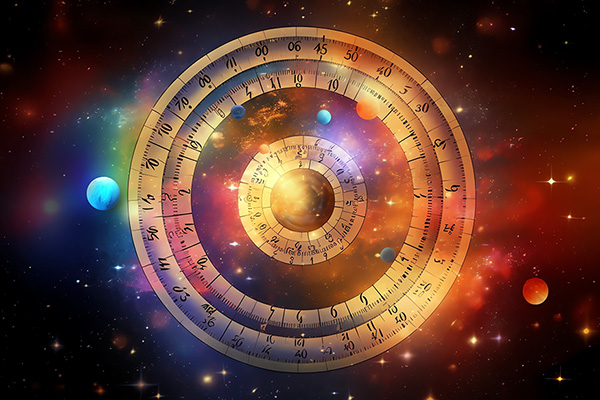 Numerology is based on the idea that there is a mystical relationship between numbers and destiny. It originated from the ancient practice of assigning numerical values to words and names, and attributing spiritual symbolism to such numbers.
In Ancient Greece, the mystic Pythagoras further developed this concept proposing that numbers are divinely inspired creations that carry sacred codes. This led to a system of divination that is still used today, and Pythagoras is therefore considered the father of modern numerology.
There are different systems of numerology that share some common principles, such as Chaldean, Pythagorean, Kabbalistic and Chinese numerology.
Numerology, however, is not fortune-telling in the traditional sense, as it does not simply attempt to prophecy or predict the future. Instead, numerology aims to reveal information about our personality, talents and gifts, our life path and purpose, as well as our potential and destiny.
In numerology, each of us has a set of unique, individual numbers known as our core numbers. These numbers are calculated from our date of birth, letters of our name, and other personal information. By analyzing the core numbers associated with us, we can gain insight into our personality, talents, challenges, opportunities, and spiritual lessons.
Ghosting, Gaslighting And Gameplaying!
 In my work as a psychic, I assist clients daily with navigating life’s challenges, especially their relationships with the people in their life. While the guidance I receive from spirit has essentially remained the same over the years, the language I use to relay this information changes over time.
The professional psychic must constantly adapt and renovate the terminology she uses in readings to communicate spirit’s messages. New slang and buzzwords continually show up in our culture as society evolves, and it must become part of the psychic’s vocabulary to ensure she communicates clearly and effectively.
Three of the new terms that frequently comes up in readings these days is ghosting, gaslighting, and gameplaying.
Ghosting
Ghosting is when someone stops communicating with you, casually ignores you, and no longer replies to any of your calls or messages. All communication is abandoned for no apparent reason.
“He has been ghosting me!” some clients frequently exclaim. “What is going on? Why is he acting this way?” In these readings, it often becomes clear that he may be doing so for one of the following reasons:
Increase Your Power And Influence With Charisma
 Charisma is a skill that can have a profound impact on our personal and professional lives. It is often wrongly assumed that charisma is a personality trait or talent that some people are born with. The truth is charisma is a learned behavior and skill that can be developed by anyone.
Charisma is the magnetic ability to attract, charm, and persuade others with our words and actions. The term originates from the Greek khárisma, which means ‘favor freely given,’ or ‘gift of grace,’ because the ancients believed that possessing this quality was a divine gift bestowed only upon those who were favored by the gods.
It is generally associated with people who are confident, engaging, and influential. By cultivating charisma, we become more effective at reaching and connecting with others, which can be invaluable in life.
Whether we are seeking to build stronger, healthier personal relationships, foster better professional connections, or make more friends, having a strong presence and the ability to engage with others is a key factor for success. Charisma is not about being arrogant, manipulative, or insincere. Rather it is about being authentic and genuine, while also being able to express ourselves in a way that resonates with others.
Charismatic people are skilled communicators who are able to listen actively, empathize with others, and express themselves clearly and persuasively. They are also able to project confidence, enthusiasm, and positivity, which can be infectious and uplifting to those around them.