tarot deck
Change Your Habits, Change Your Life!
 As 2025 comes to an end and the New Year is upon is, many of us are considering how we can improve our lives and become a better version of ourselves.
Today we might be sitting with our shiny new diary or journal, or a beautiful 2026 calendar full of inspiring affirmations, in the hope it will inspire us to lead healthier, happier, more fulfilling and successful life. But the single biggest thing that we can do to change our lives for the better and really smash our goals is to change our habits.
What we habitually do is who we will ultimately become. Our daily physical habits are our metaphysical destiny. In fact, research would suggest that approximately 95% of the things people do daily are purely habitual.
From the spiritual perspective, I always look to archetype of The Archer in the Wildwood Tarot deck as the positive symbology to help me break bad habits and create new, better ones.
The Archer is a genuinely motivating card that symbolizes strength, direction, aim and focus. When it comes to habits, it reminds us to focus on the positive ones and that by doing so, we will achieve our goals by hitting our target. Gaze upon his symbology, and it should help give you the strength to do so.
For example, I am a chocoholic, the results of which is clearly evident around my middle-aged waistline! How do I personally break the habit of a lifetime and develop a healthier relationship with chocolate? Well, the guidelines are the same for any other goal we may have:

How To Choose Your First Tarot Deck
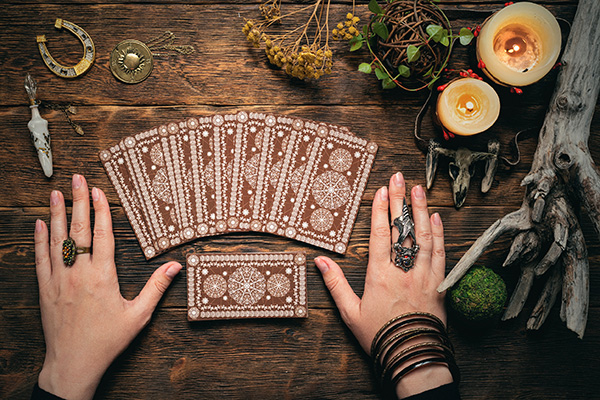 Buying your first deck of tarot cards can be daunting, especially for beginners. However, when approached the right way, it can be a magical and enjoyable experience.
I remember when I decided to buy my first deck years ago. I received a flood of recommendations from well-meaning friends and seasoned readers, all eager to point me toward their personal favorites.
True to my rebellious nature, though, I ignored it all. Instead, I followed my intuition.
I visited a cozy metaphysical shop downtown and wandered to the back, where the tarot decks were displayed on a few revolving racks.
One particular deck instantly captivated me. It had an angelic theme, and even though the imagery and Roman numerals weren’t exactly beginner-friendly, I didn’t care. I knew instantly that it was mine.
Even though I was new to Tarot, I had immersed myself in as much knowledge as I could find before purchasing my first deck. I read every book I could get my hands on and spent hours combing through spiritual forums and metaphysical blogs.
The advice I received from seasoned readers, though sometimes conflicting, gave me a broad foundation of ritual practices and deck care.
I was especially drawn to the idea of treating the cards as sacred tools, rather than just objects. So, by the time I brought my new deck home, I already had a sense of how I needed to honor it and energetically align with it.
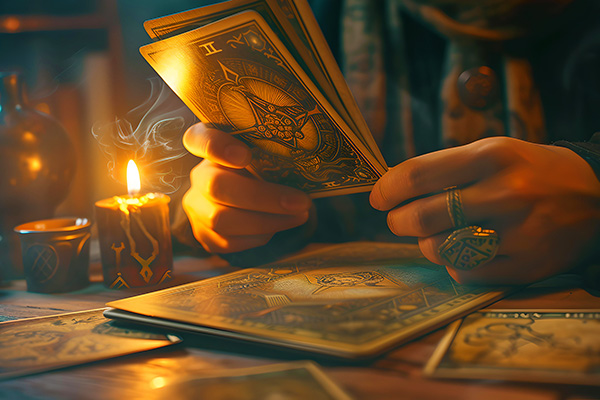
The Multi-Layered Magic Of The Tarot
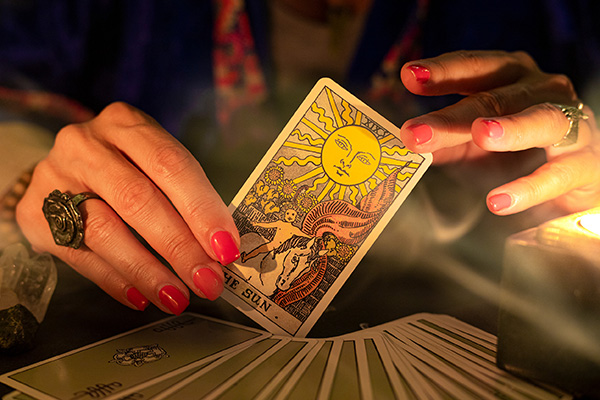 It’s no secret that the Tarot is my favorite divination tool. It is like a trusted assistant to me, always there to provide support and clarity, both in my professional work and in my own spiritual practice.
Do you know how sometimes you have a gut feeling about something, but you can’t quite put it your finger on it? Or how sometimes you have trouble remembering someone’s name, even though it’s on the tip of your tongue?
Well, that’s how the Tarot helps me when I read for people. It often helps me bridge everyday life with the esoteric and translate psychic messages in a more practical way.
The cards act as a metaphysical magnifying glass, sharpening my psychic impressions and intuitions into clear messages, guidance and predictions. Sometimes it is just a single symbolic element in a card that jumps out, demanding attention and holding the key to unlocking the essence of the message.
A single Tarot card can reveal a plethora of meanings and insights, each layer shaped by that particular reading. Tarot is deeply symbolic and fluid, allowing each card to be interpreted in myriad ways.
First, the context of the reading is important. Whether the question is about love, career, health, finances, or personal fulfillment, the meaning of a card can change significantly. For example, the Two of Cups could mean a romantic partnership in a relationship reading, but a harmonious business partnership in a career reading.
Second, the client’s state of mind and personal circumstances influence the interpretation of the card. Their experiences, desires, and fears color how the imagery and symbolism will be perceived by the psychic. The same Two of Cups might highlight existing trust issues for one person, while signifying a newfound connection for another.
The Timeless Appeal Of Tarot Divination
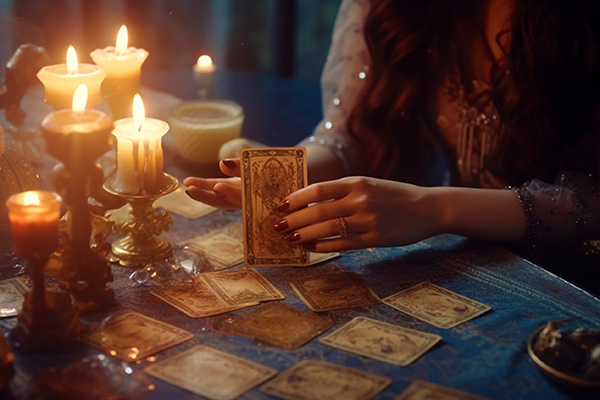 I have yet to meet a spiritually-minded person who does not like the Tarot, or at least is not a little intrigued by this famous deck of cards.
The Tarot is arguably the world’s most popular and widely used divination tool, renowned for its rich symbolism and the depth of insight it offers. As an esoteric tradition dating back centuries, the Tarot has evolved into a diverse, sophisticated system of divination used by people from all walks of life to explore the mysteries of the mind, spirit, and the future.
Unlike some other forms of divination that require specialized knowledge or tools, the Tarot is accessible to both beginners and seasoned practitioners, offering a unique blend of art, intuition, mysticism, and storytelling. Its versatility allows it to address a wide range of questions, from personal and spiritual dilemmas to broader societal issues, making it a go-to resource for those seeking guidance, clarity, and self-discovery in an ever-changing world.
Each of the 78 cards in a Tarot deck is loaded with symbolic imagery and archetypal meanings that can be interpreted on multiple levels, from the deeply psychological to the spiritual and mystical. This layered symbolism allows diviners to explore personal dilemmas, spiritual growth, and the mysteries of life.
Unlike other divination tools that may rely on more rigid systems, Tarot offers a fluid framework that adapts to the reader’s intuition, personal beliefs, and level of psychic ability, making it accessible to people of diverse backgrounds and spiritual practices.
The True Spiritual Meaning Of The Pentagram
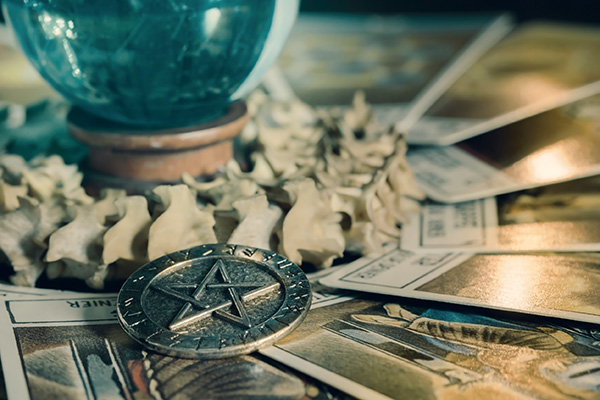 Perhaps no other spiritual or religious icon is as misunderstood as the pentagram, or pentacle. The true symbolism of the pentagram, a five-pointed star often surrounded by a circle, is commonly misrepresented.
Contrary to popular misconceptions that associate it with darkness, evil, or Satanism, the pentagram has multiple meanings within various spiritual and religious traditions, most notably within Paganism and modern Wicca.
The pentagram has been a spiritual symbol of significance for millennia, long before its association with modern religious movements.
Historically, it has been used by cultures around the world, often to represent celestial bodies, principles of harmony, or mystical concepts. Its use first appeared in ancient Greece and Mesopotamia around the 1st millennium BC.
It is not widely known that there are significant historical connections between the pentagram and Christianity. Prior to the widespread use of the cross, the pentagram was a popular symbol to adorn the jewelry and amulets of early Christians, often alongside an “X” or a phoenix. This symbol was associated with the five wounds of Christ and also represented the concept of Alpha and Omega united, as the star could be drawn in one continuous movement of the pen.
In contemporary contexts, particularly within Wicca and related neo-pagan belief systems, the pentacle has positive connotations. It’s seen as a symbol of protection, spirituality, and the interconnectedness of the elements. Each point of the star represents an aspect of balance, holistic existence, conscious living, and the cyclical nature of life.