Shamanism
The Shaman’s Recipe For Energy Cleansing
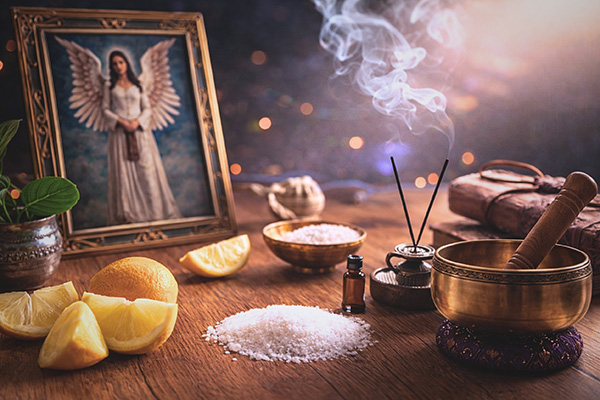 Since the beginning of time, people of all cultures have used prayer, sound, smoke, salt, water and sacred intentions to bless their homes and create peaceful environments.
The tradition of clearing the energy of a home can be found in ancient tribal customs, folklore and modern spiritual practices. The idea is that our homes hold energy which affects how we feel.
Clutter can make a room feel cramped and uncomfortable, while negative energy can make a home feel uninhabitable. Human emotions, thoughts and actions, including conflict, illness, sadness, stress, violence and even the presence of certain visitors, leave energy imprints and residue in our homes.
Removing these energy remnants from your living space can greatly improve the happiness and well-being of those who live there. This practice is both a personal spiritual practice and a way to care for your loved ones.
You may be familiar with smudging as a traditional cleansing method, but there are many other traditional ways to purify a space using natural elements, sacred sound, fragrance and focused intention.
A shaman in Colorado once taught me a wonderful energy-cleansing recipe. I have been using it for years and find it an excellent alternative to traditional smudging with sage or other herbs.
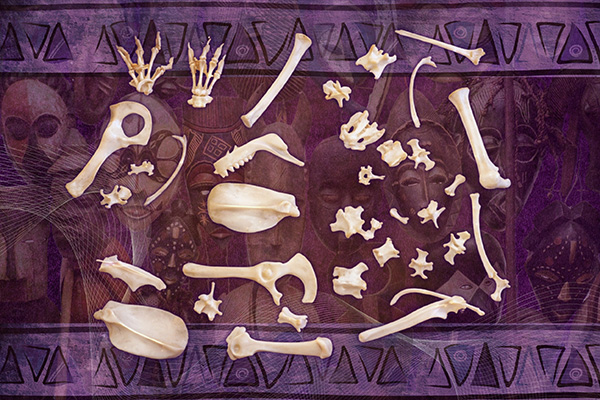
The Real Secret To Smudging Is Your Intention
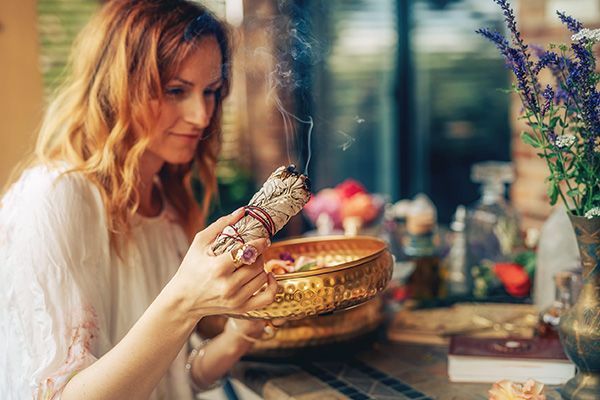 The secret to smudging isn’t just in the smoke alone. It is powered by your intention. The herbs may help to cleanse the air, but it is your focused energy and mindful purpose that makes the real difference.
This is what I learned from my mentor when I undertook my Ukuthwasa as a shaman initiate many years ago in Southern Africa. An initial part of my rigorous training as a Sangoma, or traditional healer, was a self-cleansing ritual using Mphepo, made up of herbs indigenous to Southern Africa.
“Smudging,” simply put, is the burning of certain herbs to create a cleansing smoke bath. The smoke is used to cleanse areas used for rituals and ceremonies, as well as any tools or objects used for such cleansing, as well as to cleanse people.
The practice of burning incense or herbs is held sacred by many indigenous cultures. It is aimed at protecting, cleansing and purifying the spiritual and physical bodies, with the smoke being the key to rid one of negative energy.
The intention behind any smudging ceremony is a very significant part of its success. With the focus and intent of the “smudger” fully aligned, spiritual, emotional, physical and mental balance can be achieved.
It may be a good time to smudge yourself, or your environment, when you feel depressed or angry, or feel that any exterior negative energy is affecting you, your surroundings or your possessions. Or you may just wish to ensure or enhance positive energy in spaces used for meditation or healing. Continue reading
The Difference Between Soul Rescue And Soul Retrieval
 In shamanic and spiritual traditions, soul recovery practices are based on the understanding that a person’s soul essence or ‘life force’ can become fragmented or lost due to trauma.
While these two shamanic arts are closely related and often assumed to be the same practcie, they refer to different contexts of healing. There is a subtle, but key difference.
Soul retrieval is the most common term used in modern shamanism and it is based on the idea of soul loss.
When a person experiences a severe physical or emotional trauma, such as an accident, abuse, grief, or a difficult breakup, a part of their vital essence may abandon the body to survive the experience. This is essentially a spiritual survival mechanism, similar to dissociation in psychology.
This disassociation might be related to the trauma of a car accident or extreme injury, or perhaps a memory of a time in someone’s life when an attribute of their soul felt threatened or fearful.
Other typical examples include physical, sexual or emotional abuse as a child; a feeling of abandonment after the death of a relative; financial ruin; nearly dying; or loss of a job.
Someone suffering from this kind of soul loss might feel “spaced out,” numb, incomplete, or like they are watching their life from the sidelines. Chronic depression or a sense that “I haven’t been the same” since the traumatic event are common indicators.
What Horses Teach Us About Freedom And Personal Power
 Nature is a great place to go when we need to think clearly, feel peaceful, and get back to a healthy balance. It is even better if this includes the opportunity to watch animals in their natural environment.
Animals also carry their own special spiritual wisdom that can add value to our lives if we pay attention.
When I watch horses move freely, it reminds me to honor my own path, trust my instincts, and move forward with grace.
In mythology, it is revered in many forms: as the ethereal Unicorn, the winged Pegasus born from Medusa’s blood, and Sleipnir, Odin’s magical eight-legged steed from Norse mythology.
Horses hold a deeply symbolic place in many cultures, often representing freedom, strength, spirit, and connection between realms. As we move into the Chinese Year of the Horse, these energies feels particularly relevant.
In many Indigenous traditions, especially among the Plains Nations of North America, the horse is seen not as an animal to be used as a tool, but as a “relative” and a sacred member of the Horse Nation.
Referred to by names such as the Lakota Šúŋkawakȟáŋ, meaning “Holy Dog” or “Mysterious Dog”, the horse is seen as a spiritual gift from the Great Spirit or the Thunder Beings.
Why Some Of Us Must Walk Alone To Find Our Tribe
 The topic of belonging comes up a lot lately in conversations with close friends, and it is often a concern for my clients when I do readings. A rise in loneliness appears to be a worldwide issue.
A conversation I had with a Spanish family recently was truly food for thought for me. We spoke about the disconnect with people in general, but the family in question strives to maintain family meetings and chats over meals, even though the younger ones spend more and more time on their phones.
One of the younger family members, told me that having a sense of community is part of his family’s religious practice. He makes a conscious effort to be disciplined about phone use when the family comes together. Hopefully, he will educate more of his peers about the importance of being present for in-person connection.
Personally, I have always tended to shy away from group gatherings, but I must say that I have been impressed by the warmth of the locals here in Spain, and their desire to include me in their community.
A few years ago, when my husband died just before Christmas, my Spanish friends in the farming community where I lived at the time told me, in no uncertain terms, that I would be joining them for Christmas and New Year’s family gatherings. I told them I’d prefer to stay home, especially considering the snow the previous Christmas that had confined us to our property for a few days.