jesus christ
Navigating Loneliness During the Holidays
 The holiday season is traditionally portrayed as a time of togetherness, love, joy, and belonging. We are inundated with media images of families gathered around a festive table, friends celebrating, and communities coming together.
Paradoxically, for many people, this time of year is instead filled with feelings of loneliness, isolation and disconnection.
The root cause is the societal stereotype and cultural assumption that everyone should be joyful, happy, and surrounded by loved ones during the holidays. If you’re not, for whatever reason, it can lead to feelings of inadequacy, isolation, and social failure.
Holiday loneliness is exacerbated by the stark contrast between our actual circumstances and the commercially driven, idealized versions of holiday gatherings and celebrations we see in advertisements, television shows, movies, and social media. This increases feelings of disconnection, low self-esteem, and even depression.
Loneliness during the holidays can have a significant impact on mental health. Feelings of isolation and disconnection during this time of year can exacerbate existing mental health issues and lead to the development of new ones. The constant reminders of togetherness and joy, combined with a lack of social connections and meaningful interactions, can increase feelings of loneliness, leading to emotional distress, feelings of emptiness and hopelessness, and a decline in overall well-being.
The Spiritual Importance Of Releasing Resentments
 I went out for lunch today and had a bad service experience with the waitress. It was as if she didn’t care much to listen to what I wanted. She seemed distracted and careless.
Two and a half months ago, I had a similar experience at another restaurant when the server packed the wrong items for me to take home. I felt ignored, even disrespected. Today’s experience brought back the same feelings and memories.
I was so upset that I decided I was not going to leave her a tip. But then, in the middle of my meal, while feeling angry and somewhat sorry for myself, I overheard a nearby customer calling her friend by the same name as my late mother.
This caused me to pause and reflect on my toxic thoughts about the careless waitress. You see, my mother was also a waitress many years ago. It was how she put food on the table and put us through school.
Perhaps today’s events were meant to remind me during the holiday season how many of us go through life with unhealed “mother wounds.”
Spirit now had my attention and proceeded to make me aware that my waitress had her own issues with her mother growing up, and that she is now a single mother herself, barely making ends meet. This realization instantly changed my perspective and my petulant attitude.
Comparison Poisons The Heart, Mind And Soul
 When we are going through difficult times, we tend to compare our struggles and suffering to the lives of others and measure ourselves by their perceived happiness, joy and success.
We often do this these days by comparing our own lives to what others post on social media. Then we judge and mentally torture ourselves for not living up to other people’s highlight reels of happiness and good fortune.
Sure, it is sometimes beneficial to self-reflect and strive for more based on the examples of others who serve as our role models. However, when we indiscriminately compare our own life journey to everyone else’s, we end up diminishing our own uniqueness and value.
While social comparison can motivate us to improve and grow, it can also lead to toxic self-judgment, envy, resentment, and extreme unhappiness. Constantly focusing on the highlights of other people’s lives quickly becomes toxic and self-destructive.
However, this tendency is not a character flaw in some of us. In fact, it is a natural evolutionary instinct that we all have. Our ancestors survived by living in social groups. Our tendency to compare ourselves to others is therefore a very common human trait, rooted in our evolution as a species.
The Miracle Power Of Blind Faith
 In the early 1980s, Britain was in the grip of a recession and it was hardly the time to lose your job. Unfortunately, I did, and fell into debt and depression. In total, I was about a year’s salary in debt. It was a daunting sum to pay back when I had little prospect of finding a job in such an economic climate.
I went to the bank and explained my plight to the loan officer to make arrangements to pay off my debt in increments. I remember sitting in his office and he looked me in the eye and said, “Unfortunately, it looks like you are not going to get out of this situation anytime soon. You are going to have to file for bankruptcy.”
However, being a feisty young woman of blind faith, I replied, “I can assure you that I will! Even if it takes a miracle!” In the back of my mind, I knew I desperately needed one.
Well, my miracle did not come in the form of an unexpected lottery win or tax refund, as I had hoped, but rather in the form of steady work through a temporary staffing agency, as well as sheer grit, determination and blind faith that enabled me to ‘miraculously’ turn my situation around. Yes, I did it!
This life experience may not seem like much of a miracle to some, but it certainly was to me at the time. I guess it all depends on what the term ‘miracle’ means to you? For some, like me, a miracle might be overcoming debt, unemployment, and an economic recession. For others, it might be overcoming a life-threatening illness or disability, or meeting your ideal partner after a devastating divorce, or landing your dream job against all odds. I do however believe that ‘blind faith’ is often the key, no matter the circumstances.
The Modern Practice Of Spiritual Healing
 In a world driven by science and technology, the value of our spiritual health is rarely recognized or appreciated these days, yet it is an essential aspect of our holistic health and well-being.
The truth is that spiritual healing has been practiced since the beginning of time to promote physical, emotional, mental and spiritual well-being. Our ancestors were much wiser in this regard. They had a holistic view of health and wellness that not only focused on the physical and mental, but also honored the spiritual or metaphysical aspects of our existence.
In ancient Egypt, for example, illness was treated as a battle between good and evil, and magical remedies were used in addition to herbal medicines. In ancient Greece, holism underpinned everything, and the soul, mind, and body were considered one.
In Traditional Chinese Medicine, a holistic system practiced for at least 23 centuries, healing is achieved by balancing the yin-yang life force energies that permeate everything in the universe. In the indigenous healing traditions of Native America, holistic health is represented by the four quadrants of the ‘medicine wheel’ or ‘sacred circle,’ namely the physical, emotional, mental, and spiritual states of being.
In Christianity, spiritual healing is documented with many references to the healing power of faith and prayer. The Bible also refers to the spiritual gift of healing, and there are several accounts of Jesus performing miraculous healings. In Hinduism, Ayurveda is a five-thousand-year-old Vedic system of medicine that seeks to restore the balance between the body, mind, and spirit.
What Is Christ Consciousness?
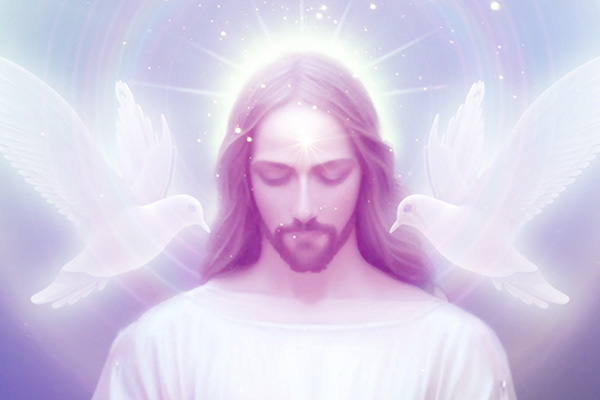 The mystic and clairvoyant Rudolf Steiner predicted more than a century ago that humanity is entering a time in which a new spiritual awareness or higher consciousness shall emerge. Steiner named this new awareness Christ consciousness, a transformative energy that would transcend orthodox, dogmatic religion.
Steiner explains that Jesus was able to tap into a higher level of consciousness that comes from the realm of God, Source, Spirit, the Divine. He became “christed”to show us how to accomplish the complete activation of the spiritual seed we all have within our soul. “The rest of humanity must now, in imitation of Christ, gradually develop what was present for 33 years on the Earth in one single personality,” he writes.
Jesus understood that even just a little speck of this higher energy, no larger than a mustard seed, could transform human beings into exalted beings of a higher dimension. The essence of Christ consciousness is therefore simply this: Jesus came to teach us that the blessed pathway to our inner divinity and the glorious kingdom of higher consciousness already lay charted within the heart of each one of us. All we need to do is follow it.
The concept of higher consciousness or spiritual enlightenment is found in many world religions. Christ consciousness is also known God consciousness in Protestant Christianity; Cosmic consciousness in Hinduism; and Pure consciousness in Buddhism. Renowned psychic Edgar Cayce referred to it as “the Christ pattern”. Channeler Paul Selig describes Christ consciousness as a higher energy vibration at which one realizes that “God is the frequency of every cell in your being.”
Christ consciousness is therefore an awareness of the higher self as an expression of the Universal Consciousness. It is an elevated state of spiritual awareness that one achieves through self-realization and unity with God Source, Spirit, the Divine.
A Brief History Of Astrology
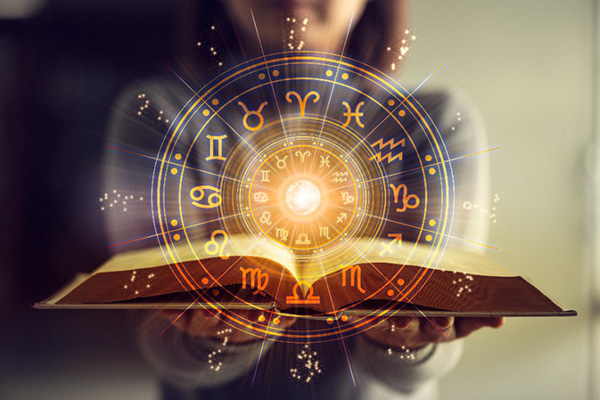 The energies of the planets and stars affect us on many levels every day, whether we were aware of it or not. The earliest humans looked especially to the movements and phases of the Sun and Moon to guide them in their decisions about when to hunt, when to plant and harvest, and when to prepare for winter or migrate.
From this evolved the practice and study of Astrology. The early civilizations of Mesopotamia were the first to observe the patterns formed by stars in the galaxy as long ago as 3000 BC, while Indian astrology began to emerge as far back as 1200 BC.
The original astrologers identified five ‘wandering stars,’ which together with the sun and moon became the seven original ‘planets.’ More planets were of course identified over time, as technology advanced to introduce the telescope and other astronomical devises.
The Babylonians are generally credited for first developing formal Astrology, because they developed astrological charts to predict the recurrence of the seasons and certain celestial events. Centuries later, Ancient Egypt and Greece discovered Babylonian Astrology, where it soon became highly regarded as a science and was eventually also embraced by the Romans, as well as in the Middle East. In time, its popularity spread throughout the rest of the world. Today, we still use the Roman names for the zodiac signs.
Meanwhile, separate systems of Astrology also emerged in India, China, and Mesoamerica. It remains unclear whether the Babylonian, Indian (known today as Hindu or Vedic Astrology) and Chinese systems of Astrology evolved in isolation and independently, or whether they mutually influenced each other. There are many similarities between these systems, but also many distinct differences. Scholars have been studying and debating this for centuries, but the matter remains inconclusive.