self-awareness
Seeing Yourself As You Truly Are
 The art of ‘being seen’ begins within. It is not in the eyes, or heart, of an external beholder. It is the grace of being able to see oneself through the Divine Eyes of our Creator.
Every soul is unique. No two are the same. Each soul emanates from the Supreme Loving Source to offer its unique beauty and pleasure to God in an incomparable, individual way. When we look at ourselves through this lens, the true beauty, light, and power of the spiritual spark of our being shines upon our inner vision.
Relationships offer mirrors too. But what they show vary according to the quality of the reflecting surface. And what we see in them depends upon how well we know, see, and stand in the truth of our own higher self.
For example, if I look at myself in a broken mirror, do I see a crack in my face? I might…if I am not sure of who I am. However, if I know myself to be whole, I can readily recognize that the crack is in the mirror, and not in my face.
Similarly, there are relationships in life that reflect broken images back to us. That does not mean that we are broken, nor that the other person or people involved are broken either. We all have wounds and scars and other gaping holes yet to be healed, or not.
Whatever the case may be, it is the relationship itself that offers up the reflective element. It is the dynamic of exchange that shows itself as either clean, clear, balanced, cracked, smeared, skewed, and so on.
Knowing oneself in truth and wholeness is thus extremely valuable. If we do not possess such certainty of self, we may accept a broken or distorted impression projected by an ill-functioning relationship to be a reflection upon ourselves.

The Light At The End Of The Tunnel
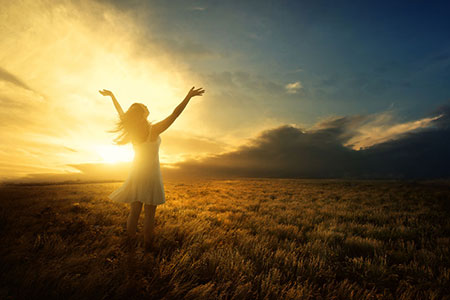 As the days get longer and the weather gets warmer in the Northern Hemisphere, there is a feeling of lightness that permeates everything. The saying “April showers bring May flowers,” is especially true this year, with wet weather helping the grass to turn green and the perennials to bloom.
Around the world, hope currently springs eternal, as more vaccines are being administered and COVID-19 statistics are starting to improve. We are all ready to get back to a semblance of normalcy, after more than a year of our lives being turned upside down and families separated.
Some of us are still in lockdown or subject to various restrictions. Some days are better than others. We are not entirely out of the woods yet, but at least it seems we are getting there, slowly but surely.
This past year of social restriction and isolation has however been an opportunity to reflect and make some needed changes to our lives. Although most people did not anticipate such an upheaval for so long, the additional time in isolation has allowed many of us to re-evaluate our life choices and really focus on what we want to accomplish in future.
Some of us have concentrated on charity. Some have turned to activism. Some have focused on self-care and self-healing. Regardless of our choice of focus, many of us have become more determined to make a difference in the world. This truly is one of the many blessings that has come from all the chaos.
It is important, however, that when we set these new intentions for our future, not to overreach with impossible goals or temporary plans. If feasible, choose a course of action that will be sustainable long after the immediate pressure of the pandemic has dissipated.
Fun Facts You Never Knew About Your Zodiac Sign
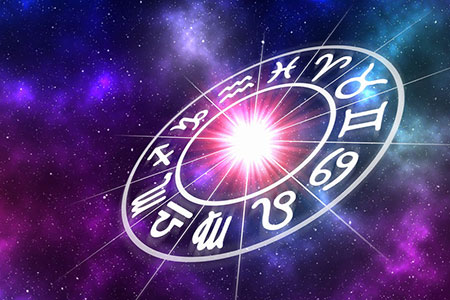 The zodiac signs we are born under afford us certain personality traits, talents and gifts in our lifetime. Over the course of one’s life you can typically see these traits in an individual’s personality and life choices.
Astrology has been around for centuries and offer us a special insight into our life path. The Zodiac signs can be a lot of fun to investigate, even for the lay person. If you look closely at the traits of your own sign you will most likely discover many accurate descriptions of your personality in your sign that may be hard to deny.
You may also come across certain traits and fun nuggets of information that may surprise you. For example, it has been noted by astrologers that some of the zodiac signs tend to lean more towards having stronger psychic ability. These are known as the so-called ‘psychic signs,’ namely Cancer, Pisces, Scorpio and Libra.
If you were born under one of these signs, but do not consider yourself psychic, then you may want to take another look. It could be that you are more gifted than you realize, but you are not making proper use of your psychic talents.
Another fun principal of astrology centers on those who are born on the cusp between two signs, meaning they have trails of both signs. For example, those born on April 19 or 20 on the Aries-Taurus Cusp are literally ‘born leaders’ because they have the natural leadership traits of Aries combined with the inner strength and bullish perseverance of Taurus.
Another interesting ‘born leader’ is the Pisces-Aries Cusp born March 19 to 26. They strike the perfect balance between being a dreamer and idealist, while also being a determined, tough, and sometimes highly opinionated ‘go-getter.’ They bring the best of both worlds to innovative leadership positions that require imagination and an unconventional approach.
The Mystical Cycle Of The Moon
 Traditionally many cultures worldwide centered their spiritual practices around the Moon and the phases it cycles through once approximately every 29 days. These phases reflect the Moon’s journey around the Earth, revealing a little more or a little less of this mysterious satellite.
Much like the cyclic seasons of the year, the Moon’s phases represent different aspects of personal contemplation for the spiritual practitioners and metaphysicians. The Moon represents our intuitions, hidden aspects of self, and the nurturing empathy a mother would show a child.
The New Moon begins and ends each lunar cycle. As a ‘blank canvas’ it suggests new beginnings, or the completion of a full circle. This is the starting point for working with the Moon’s phases. Time your lunar calendar each month around the New Moon. Note, it will not be visible, but instead a dark circle. Use a white candle or another source of light to represent the fully illuminated Moon that is to come and start new ideas or projects.
As the Moon grows in size it goes into its ‘waxing’ phase. It will first become a crescent shape a quarter of the way in its orbit around the Earth, and later a wedge shape called gibbous. As it grows, so too will you and your ideas. Each day, ask yourself what is going right. Ask the Universe for guidance and inspiration, and remember that it’s all right to change plans or make revisions.
As the Moon is in its growing phase, each day a little more of its surface is cast in light. The Moon also rises an hour later each day in the cycle. Its many craters are a reminder that despite perceived flaws, something can be wonderful when illuminated.
We are all awed by the sight of the Full Moon glowing in the sky. This is the time in the cycle when we can enjoy the fruits of our efforts, and also examine what worked or did not work in practice. This is also the time in the lunar cycle when emotions run at their highest, so be careful of acting too impulsively. Be sure to also show gratitude and humility for what you’ve accomplished so far.
Showing Up For Your Spiritual Purpose
 We are all given gifts. Talents. Abilities. Aptitudes. We are supposed to share these gifts with the world. There are many gifts, callings and passions, and many things we are meant to use for the greater good. And an unused, neglected gift is a tragic travesty.
It feels good when we are expressing our truth in the world, but many let their gifts lay dormant. They have forgotten what they came here to do.
It is our spiritual duty to show up for our part and fulfill our life’s spiritual purpose. We must tap into our abilities and share our message with the world. Some of us are given opportunity after opportunity to show up and apply our gifts, but we turn down every chance to shine.
If ask you today, right this moment, what makes you really excited? What do you truly enjoy doing? What is your truth? Your passion? What message would you like to share with the world? Find your inner truth and show up to do your part.
I knew from a young age I was here to help people get on the path they are meant to be on. Today, I help folks to live their best possible life.
Each person has their own unique gifts, talents and abilities and life path. I help people to identify what this is by using my own gifts. I share what spirit’s message is for each person, to help them shine and connect with their unique divine truth.
I find great joy in helping people connect with their own unique gifts. I also love to teach techniques that vibe with each person to help them to connect with their own healing and inner guidance.
A Sincere Apology Is Good For The Soul
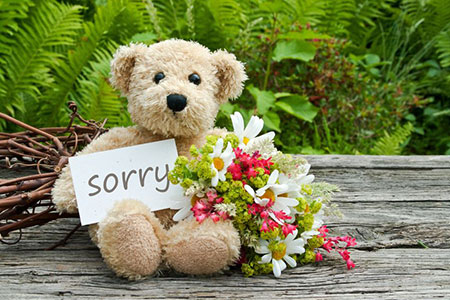 One of the most difficult things in life is knowing when to apologize. It is obvious in some situations, but in others not so much. There are times when we need to weigh out all our options. Is the situation worth an apology, even if you are not the one who created a problem?
Knowing the right time to apologize is critical to the resolution. Was it done intentionally, or was it unintentional? Did the action cause others stress, worry, or pain?
You must also ask yourself if you can live without apologizing the rest of your life. Is it worth losing a friendship, leaving a group, resigning from a job, or not speaking to a family member ever again?
The good old Golden Rule can always come in handy in this dilemma. If you have done something that you would not want done to you, then apologize and seek atonement! Many people find it almost impossible to apologize. They struggle to acknowledge their own part in an argument or wrongdoing.
Some just do not seem to understand their actions were unacceptable, or they always feel that the world is out to get them. There is no compromise in their mind. They always try to twist every situation to make it seem like it is another person’s fault.
For some people, on the other hand, an apology seems to roll off their tongue a little too easily. When a sincere apology is made it must be followed by actions. Actions speak louder than words. By not repeating the offense, for example, it shows a true and sincere apology.
Sometimes all the other person needs to hear is a sincere, “I am sorry.” When we accept responsibility for our actions, we tell others we are sorry for hurting them. It is not always easy, but releasing guilt always is good for the soul.